A year of pests in central Virginia
| Season | What shows up | What we focus on |
|---|---|---|
| Late winter & spring | Odorous house ants in kitchens, carpenter ants waking up in damp wood, carpenter bees boring into fascia and deck rails | Baiting ant trails, finding carpenter ant nests, treating and plugging bee galleries |
| Summer | Paper wasps under eaves, yellowjackets in the ground and in wall voids, spiders around porch lights, fleas carried in by pets | Nest removal, web sweeping, crack-and-crevice work at doors and windows |
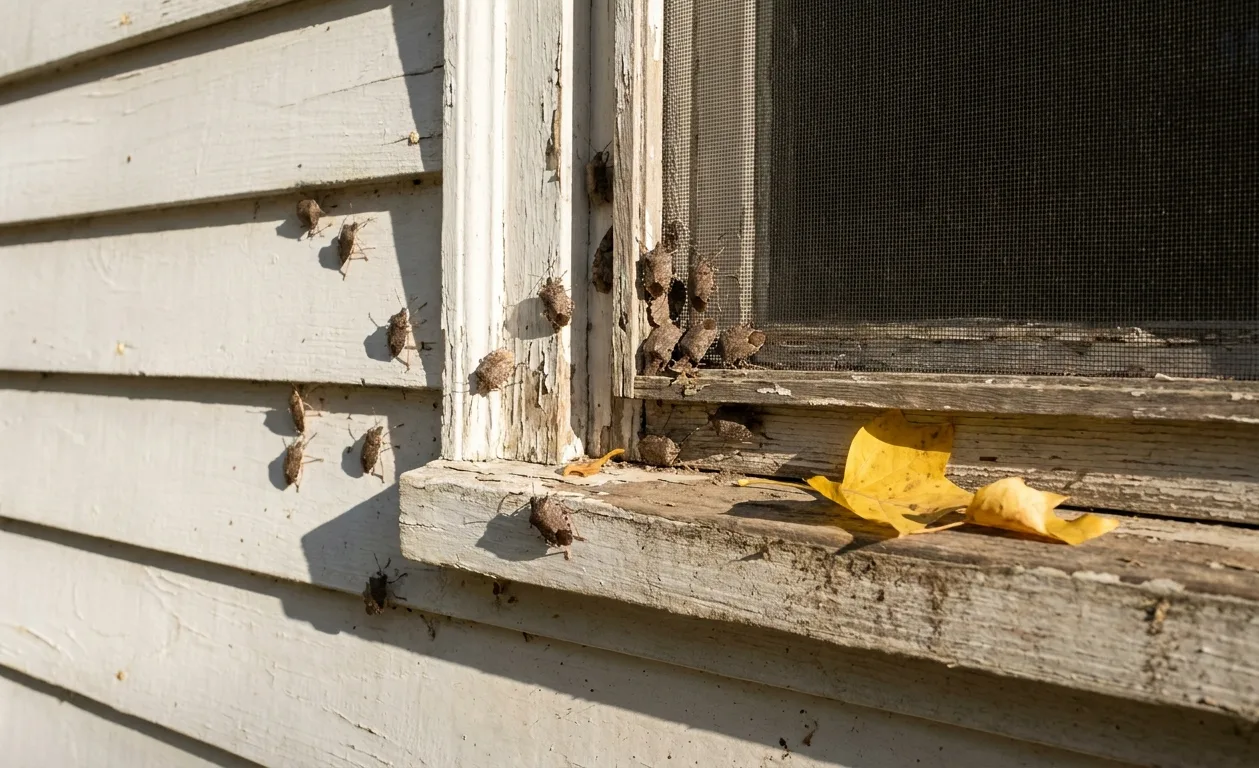
| Fall | Brown marmorated stink bugs and Asian lady beetles clustering on south and west walls, then working into attics and window frames | Exterior treatment timed before they gather, and sealing gaps around windows, soffits and vents |
| Winter | Camel crickets in basements and crawl spaces, overwintering stink bugs emerging on warm days, mice | Monitoring in lower levels, moisture advice, and rodent work where needed |
That rhythm is why C’ville Termite Removal Experts sets most houses in this area up on quarterly service. Each visit is aimed at whatever is about to arrive in the next few months.
What a service visit includes
- Walk-around and conversation. We ask what you have noticed since last time and look at the areas that matter: foundation, eaves, entry doors, garage and crawl space vents.
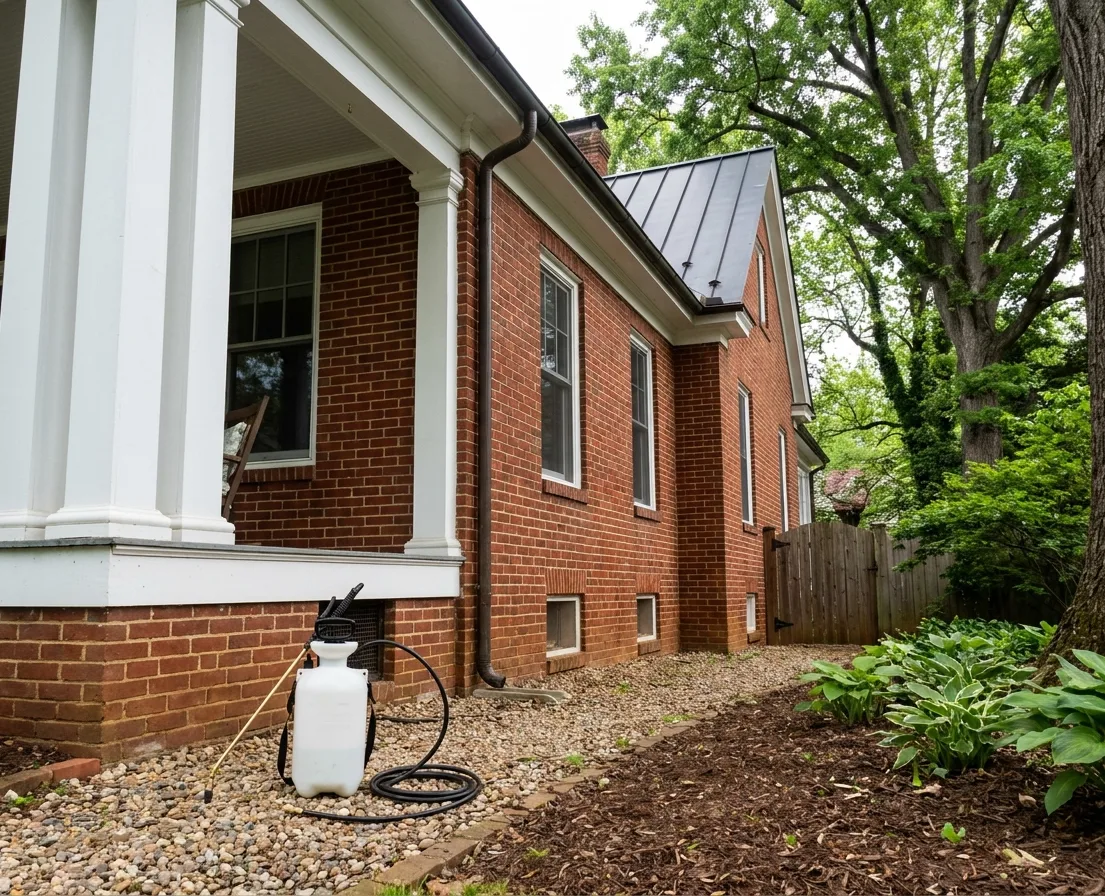
- Exterior band treatment. A targeted application along the base of the house and around doors, windows and utility penetrations, where most pests cross into the building.
- Eave and web sweep. We knock down wasp starts and spider webs from reachable eaves, porch ceilings and light fixtures.
- Interior work on request. If something is getting inside, we treat the specific spots it is using: under sinks, behind appliances, along baseboards. We do not spray open rooms.
- A short written note. What we saw, what we applied and where, and anything worth fixing before the next visit.
If pests show up between scheduled visits, call and we will arrange a return trip rather than making you wait for the next quarter.
Stink bugs: the pest everyone here asks about
Brown marmorated stink bugs are a fixture of autumn in the Blue Ridge foothills, and houses on the western side of the county near the orchards often see the heaviest numbers. They do not bite or breed indoors, but hundreds of them in an attic or a spare bedroom is a genuine nuisance. Timing matters more than anything else: exterior treatment and sealing in early September does far more than spraying the ones already crawling on the ceiling in November. Once they are inside a wall, a vacuum with a disposable bag is the best tool for the stragglers.
Spiders, and the one people worry about
Most of the large brown spiders we are shown are wolf spiders or grass spiders, which are harmless to people. Brown recluses are rarely found in Virginia. Black widows do live here, usually in woodpiles, meter boxes, sheds and the dark corners of garages, so wear gloves when you move stored items. Cutting down spiders mostly means cutting down the insects they feed on, which is why exterior lighting and door seals come up so often in our notes.
Cockroaches need their own plan
German cockroaches, the small tan species found in kitchens, apartments and restaurants, do not respond to a routine perimeter service. They live indoors and breed quickly. Getting rid of them takes gel baits placed where they hide, a growth regulator to break the breeding cycle, and several follow-up visits close together. If that is what you are seeing, tell us when you call so we schedule it as a dedicated job.
Between visits: keep mulch a few inches below the siding, trim shrubs so they do not touch the walls, move firewood away from the house, and replace worn door sweeps. Each of these removes a route pests use to get inside.
Mice and rats are handled through our separate rodent control service, which can be scheduled alongside your quarterly visits.