
The rodents we deal with in Albemarle County
House mice account for most calls inside the city. They slip through a gap the width of a pencil, nest in insulation and behind kitchen cabinets, and breed quickly once they settle in. The busiest stretch for us runs from October into early winter.
Deer mice and white-footed mice are common out in the county, in homes that border fields and woods, and especially in garages, sheds, barns and seasonal cabins. Deer mice can carry hantavirus, so we treat nesting material from them with extra care.
Norway rats are larger and burrow. We find them along creek banks, under decks and sheds, around compost and chicken feed, and near commercial dumpsters. A rat problem usually starts outdoors and is handled differently from mice.
Where they get into local houses
Every building is different, but the same weak spots turn up on job after job in Charlottesville:
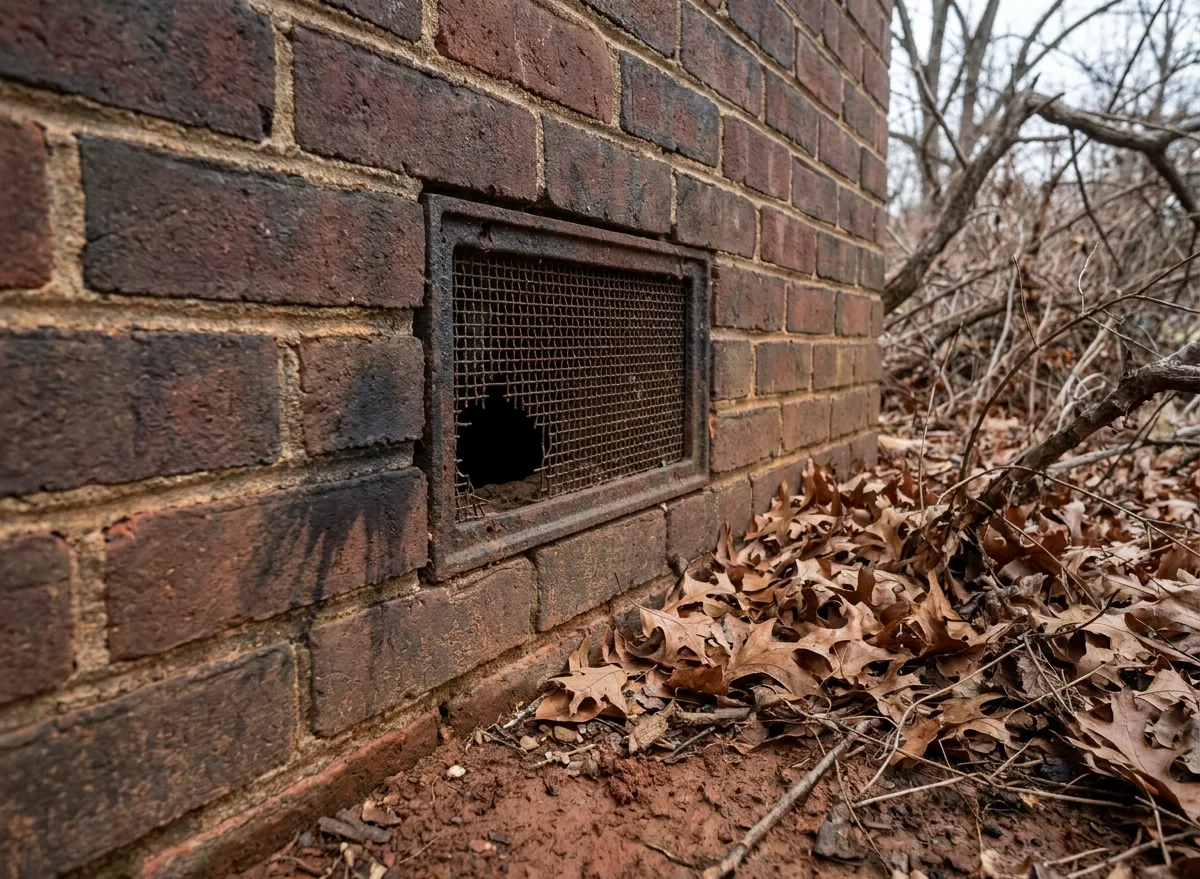
- Crawl-space vents with torn or missing screens.
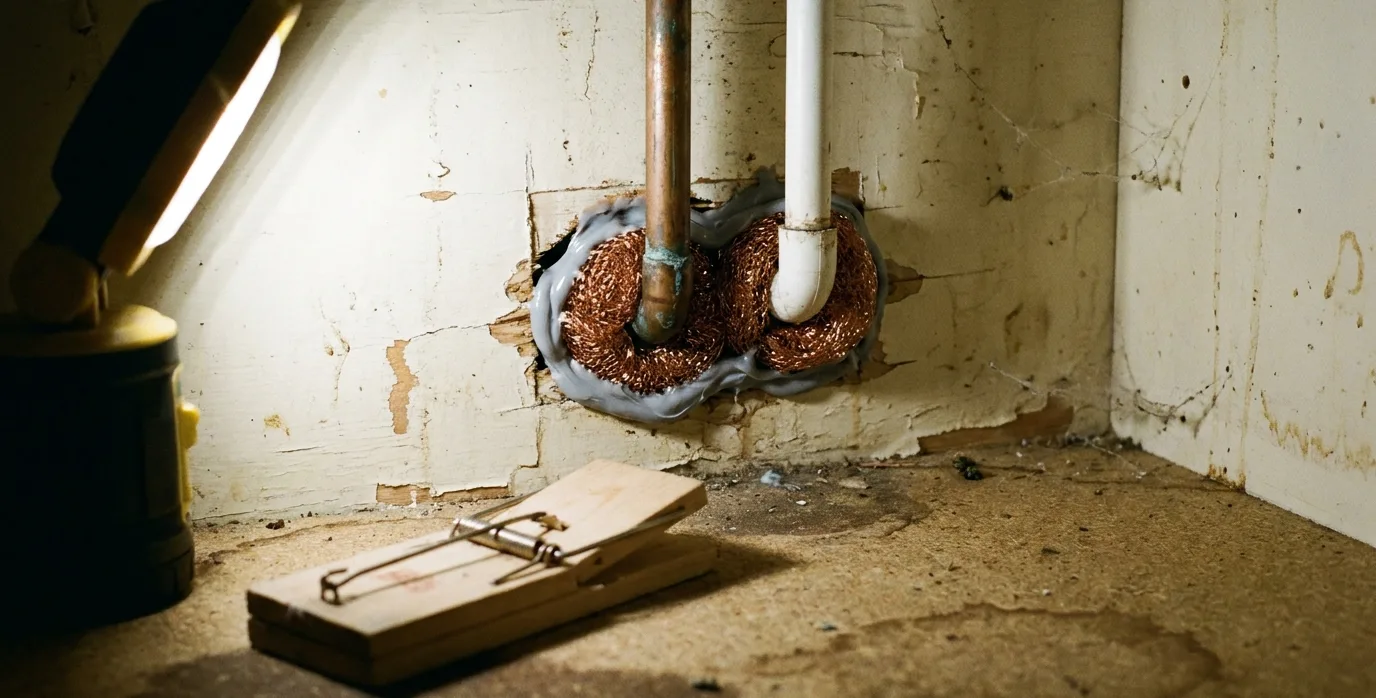
- Gaps around the heat pump line set, dryer vent and outdoor spigots.
- Worn weatherstripping at the bottom of the garage door.
- Loose mortar joints and settlement cracks in older brick and stone foundations.
- Openings where a porch, sunroom or addition joins the original house.
- Soffit returns and the corners of the roofline, reached by climbing siding or overhanging branches.
What the work involves
| Step | What we do |
|---|---|
| Survey | Walk the exterior at ground level and along the roofline, go through the crawl space, attic and garage, and mark every opening and every sign of traffic: droppings, rub marks, gnawing and nests. |
| Removal | Set snap traps in the runs and nesting areas indoors. For rats, add locked bait stations outdoors where they are appropriate and safe for pets and wildlife. |
| Sealing | Close the openings with materials rodents cannot chew through: steel or copper mesh, hardware cloth, metal flashing, masonry patch and new door sweeps. |
| Follow-up | Return to check and clear traps, confirm no new activity, and adjust any seal that has been tested. |
Why we avoid poison inside the house
A mouse that eats bait indoors does not walk outside to die. It crawls back into a wall or ceiling void, and a few days later you are cutting drywall to find the smell. Poison also puts pets at risk, along with the owls, hawks and foxes that hunt around the edges of the county. That is why C’ville Termite Removal Experts relies on traps indoors: they show exactly what was caught and where, and they tell us when the problem has actually stopped.
Cleaning up after rodents
Droppings and nesting material in an attic or crawl space are more than unpleasant. When we clean an area, we wet it with disinfectant first instead of sweeping or vacuuming dry debris, which can put dust into the air. Heavily soiled insulation can be bagged and removed, and entry points are sealed before anything new goes in.
If you are clearing out a shed, barn or cabin on your own, the CDC advice applies: open it up to air out first, wear gloves, and spray droppings with a bleach solution before wiping them up.
Signs it is time to call
- Droppings in a kitchen drawer, under the sink or along the back of the pantry.
- Scratching or scurrying above the ceiling after dark.
- Chewed food packaging, or shredded paper and insulation in a corner.
- Dark greasy marks along a baseboard or a sill plate.
- A dog or cat staring fixedly at the same spot on a wall.
Seal before winter. Sealing done in late summer or early fall costs the same as sealing in December, but it means the mice never move in and you avoid the trapping phase altogether.
Rodent work often goes hand in hand with our general pest control visits, and it is one of the most common calls we get once the weather turns.