Why Charlottesville houses attract termites
Central Virginia sits well inside the zone where termite pressure is rated moderate to heavy, and the local conditions help colonies along. The red Piedmont clay under most of the city holds water long after a storm passes. Many neighborhoods are shaded by mature oaks and tulip poplars, so fallen limbs, old stumps and buried roots give colonies plenty to eat before they ever reach a house.
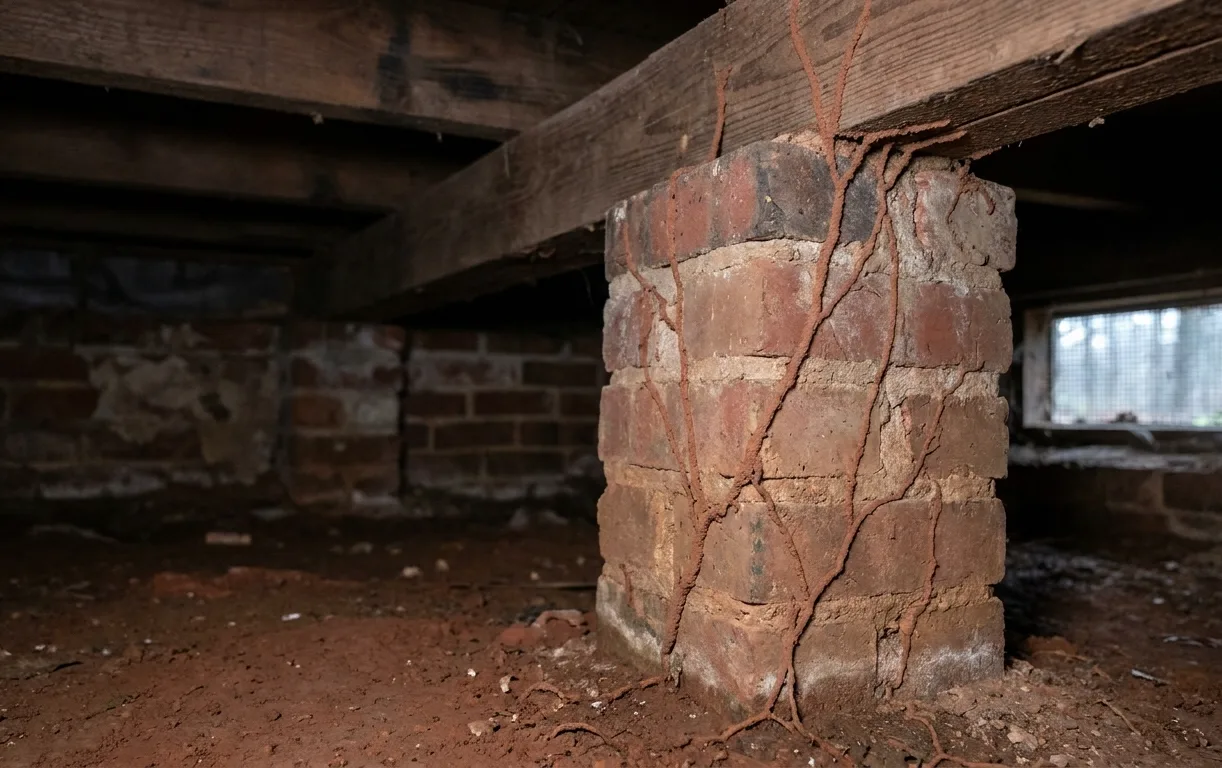
The housing stock matters too. A large share of homes in Belmont, Fry’s Spring, Rugby and North Downtown were built before the Second World War on brick piers or fieldstone foundations with vented crawl spaces underneath. Those crawl spaces are often damp and dark, and sometimes still hold scraps of lumber left by the original builders. Eastern subterranean termites need exactly that: steady moisture, soil contact, and a sill plate or floor joist within reach.
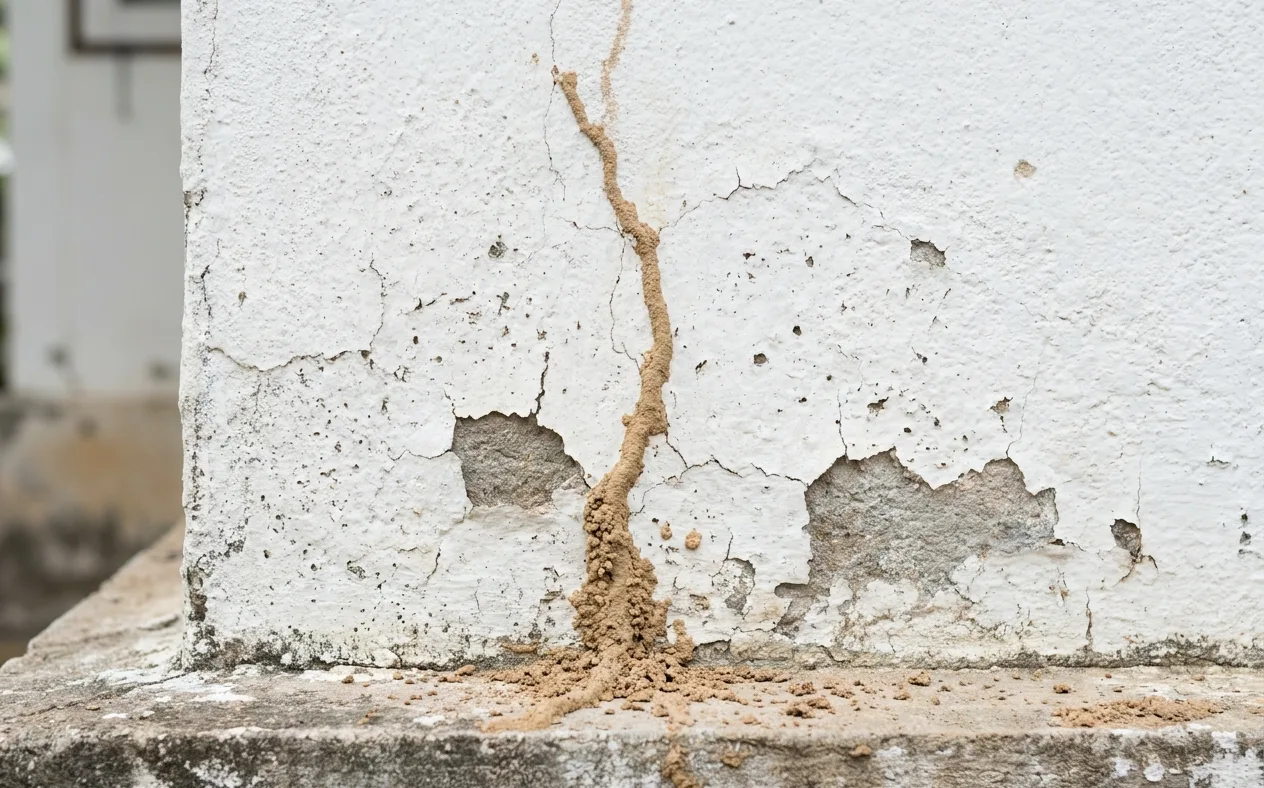
Newer construction is not exempt. Slab and basement homes in Crozet, Pantops and the 29 North corridor are often surrounded by deep mulch beds, irrigated landscaping and foam board insulation that hides mud tubes where no one looks. We regularly find activity in houses less than fifteen years old whose owners assumed the builder’s pre-treatment was still working.
Pest and termite services in Charlottesville
Termite Inspection
A crawl-space-to-attic look at the whole structure, written up with photos. We also prepare wood destroying insect reports for home sales across Albemarle County.
Termite Treatment
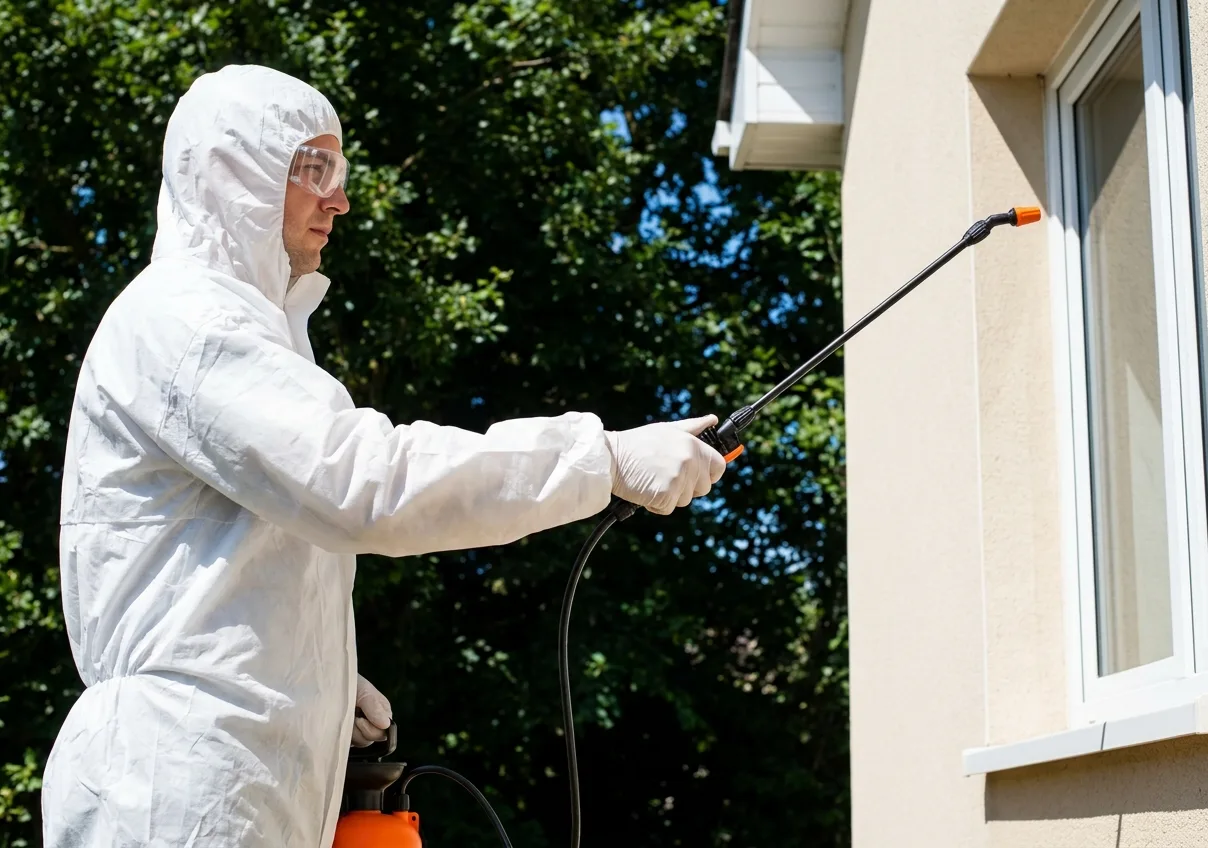
Liquid soil treatment, monitored bait stations, or a combination, chosen after we have seen how the house was built and where the termites are coming in.
Rodent Control
Mice move indoors when the first cold nights arrive in October. We trap what is inside and seal the gaps that let them in.
General Pest Control
Seasonal service for stink bugs, ants, camel crickets, spiders and the other pests that show up in central Virginia homes throughout the year.
Bed Bug Control
Heat treatment for houses, apartments and student rentals, followed by a return visit to confirm the bugs are gone.
Found something and not sure?
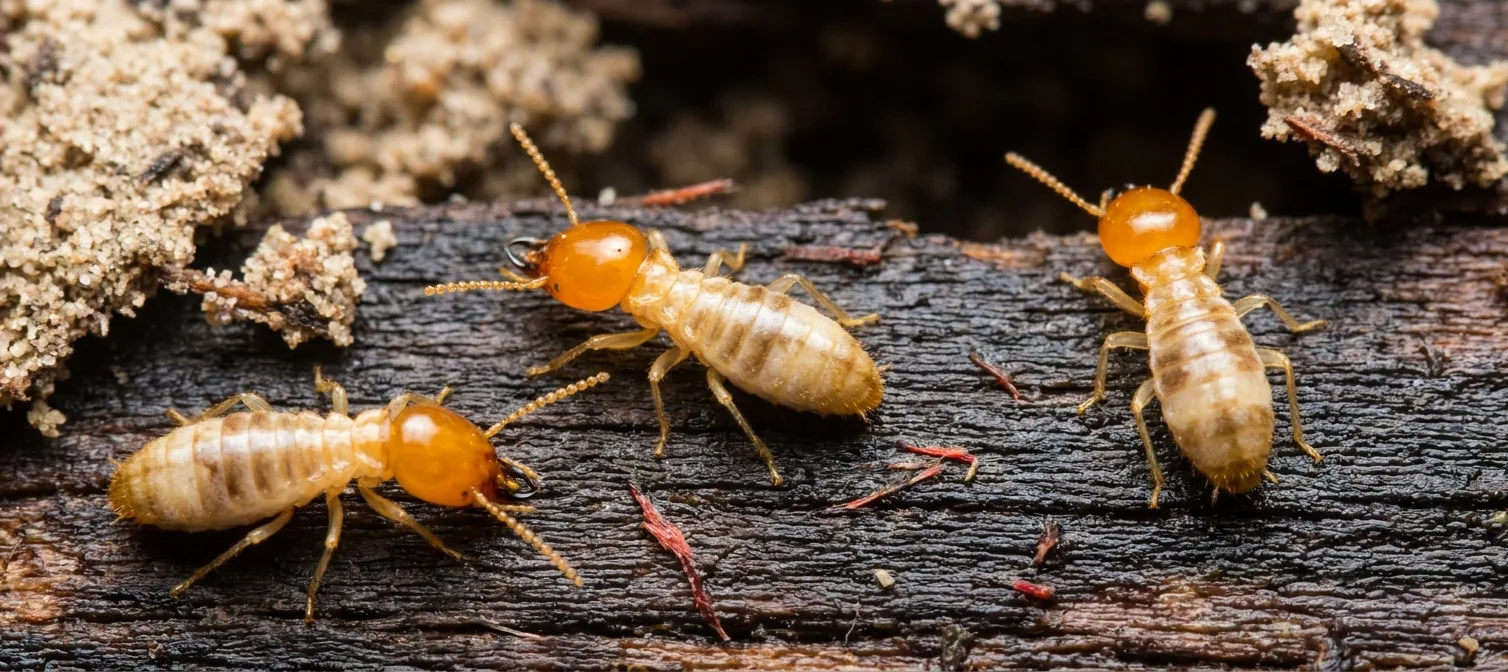
Take a clear photo of the insect, the wings or the damage, then call. Many questions get answered before anyone drives out.
How we handle termite control on a local home
- We inspect before we price. A technician walks the foundation, crawls the substructure, checks the garage and basement, and sounds suspect wood. You see what we see, including photos of the tubes or damage.
- We match the method to the building. A 1920s house on piers in Belmont and a 2015 slab home in Old Trail call for different plans, and we explain the reasoning in plain terms.
- You get a written proposal. It lists the treated area, the product, the renewal terms and the full price. There is no pressure to sign during the visit.
- We treat, then return. Liquid jobs get a follow-up check. Bait systems get serviced on a set schedule so a new colony is caught early.
| Common local house type | Where termites usually enter | What tends to work |
|---|---|---|
| Pre-war home on brick piers or stone foundation | Up the piers, along hidden cracks in old mortar, through wood left touching the crawl-space floor | Soil treatment around every pier and the perimeter, plus removing wood debris and addressing moisture |
| Mid-century brick ranch on a block crawl space | Hollow block cores, front stoops, and additions where the footing changes | Perimeter trenching with block-void treatment where activity is found |
| Newer slab or basement home | Plumbing penetrations, expansion joints, behind foam insulation and under thick mulch | Bait stations around the outside, or targeted drilling at the points of entry |
| Farmhouse, barn or outbuilding in the county | Sills set close to grade, wooden posts in soil, stacked firewood | Treating the main structure, plus straightforward advice on the outbuildings that are worth protecting |
Seeing winged insects inside this spring? Save a few in a zip-top bag or on a strip of tape, note where they came out, and call (434) 722-3819. Swarmers inside a house almost always mean the colony is already feeding on it.
Areas we serve around Charlottesville
Our office is on US-250 Business, so a trip across town is short. Within the city we are regularly in Belmont, Woolen Mills, Fifeville, 10th & Page, Greenbrier, Locust Grove, Barracks Road, Johnson Village and the streets around the University of Virginia. In Albemarle County we cover Crozet, Ivy, Earlysville, Hollymead, Keswick, North Garden and Scottsville, and we also travel to Ruckersville, Palmyra, Lake Monticello and Zion Crossroads.
Rural properties are welcome. Long gravel drives, detached garages and old barns are part of working in this county, and we plan the visit around them.
Termite questions we hear from Charlottesville homeowners
- When do termites swarm in Charlottesville?
- Most swarms here happen between March and May, usually late morning on a warm day that follows rain. Swarmers coming out of a baseboard, a window frame or a basement wall in that window of the year are a strong sign of an established colony in or beneath the house.
- Are drywood or Formosan termites a concern in Albemarle County?
- Not as an established local population. The species doing the damage in central Virginia is the eastern subterranean termite. Drywood termites occasionally arrive inside antique furniture or salvaged lumber brought from farther south, and we treat those pieces individually when it happens.
- Do you need to drill through my floors?
- Only where a treated zone has to reach soil under concrete, such as a garage slab, a porch that is filled with dirt, or a basement floor. Crawl-space homes, which make up much of the older housing in the city, can usually be treated by trenching along the piers and the foundation walls with no drilling indoors.
- How long does a treatment protect the house?
- A liquid treatment typically keeps working in the soil for several years, and a monitored bait system protects the house for as long as it is serviced. How long you are actually covered depends on the renewal and warranty terms, which we put in writing before you agree to anything.
- Which areas outside the city do you cover?
- Albemarle County communities including Crozet, Ivy, Earlysville, Keswick, North Garden and Scottsville, plus nearby parts of Greene, Fluvanna and Louisa counties such as Ruckersville, Lake Monticello and Zion Crossroads. If you are unsure, call with the address.