
What we are treating around here
Nearly every job we do in Charlottesville and Albemarle County involves the eastern subterranean termite. Its colonies live in the ground, sometimes many yards from the house, and send foragers through the soil and up through shelter tubes to reach wood. Cut that soil connection and the workers inside your walls can no longer get back to the moisture they depend on.
That is why treatment at C’ville Termite Removal Experts is mostly about the ground. We are rarely fumigating or tenting anything; the species we deal with simply does not call for it. What changes from house to house is how we reach the soil and how long you want the protection to keep working.
Option one: non-repellent liquid soil treatment
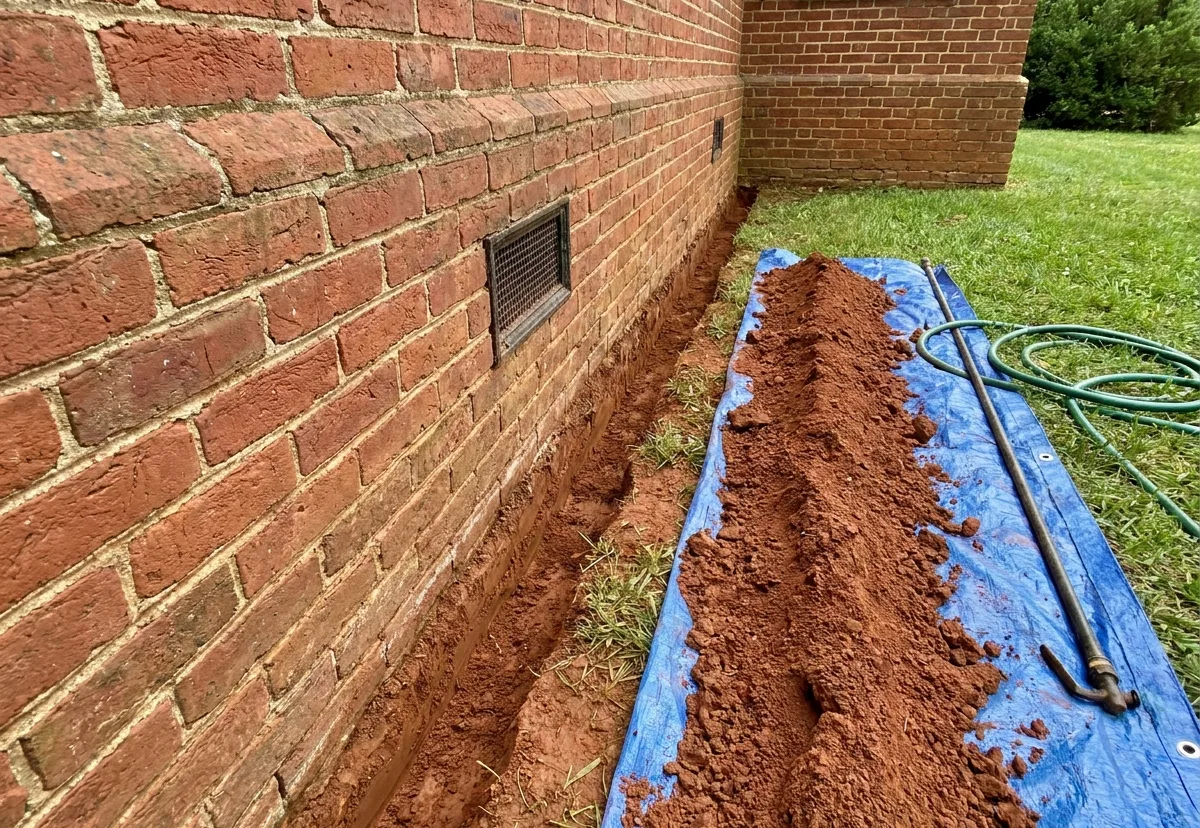
We dig a narrow trench along the foundation, apply the termiticide into the soil at the rate on the label, and backfill. Where concrete sits against the house — a garage apron, a patio, a front stoop — we drill small holes and inject beneath it so the treated zone has no breaks. Inside a crawl space the same work is done around each pier and along the inside face of the foundation wall.
Current products are non-repellent. Termites do not detect them and keep tunnelling through the treated soil, picking up the material and carrying it back to nestmates. Activity inside the house usually drops off within a few weeks.
When liquid treatment is the better fit
- Active termites are already inside and you want them stopped fast.
- The house sits on an open crawl space where the soil is easy to reach.
- You prefer one visit and an annual check rather than ongoing station service.
Option two: monitored bait stations
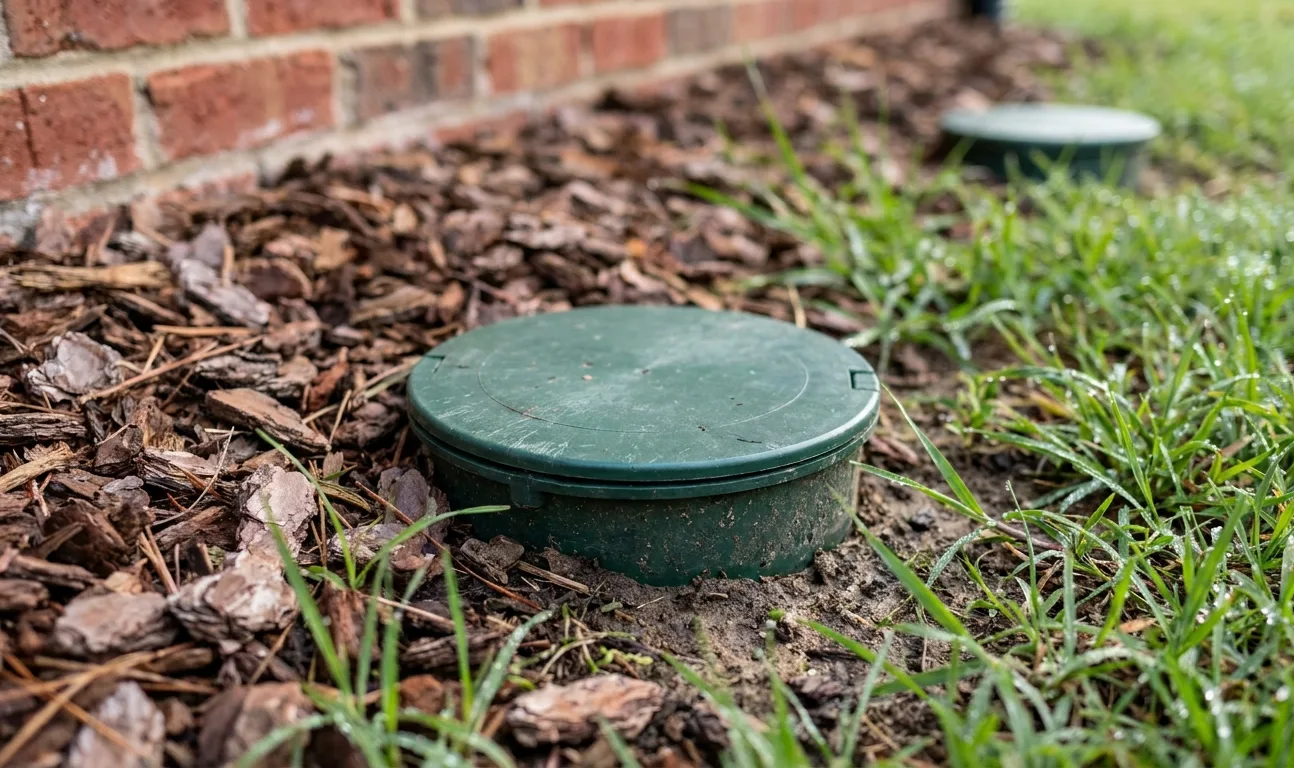
Stations go into the ground every ten to twenty feet around the house. Each holds a cellulose bait laced with a growth regulator that stops termites from molting. Foragers feed on it, share it through the colony, and the population declines over the following months. A technician opens every station on a set schedule, records what is inside, and replaces bait as it is eaten.
When bait stations are the better fit
- The house is on a slab or finished basement, where drilling would mean cutting through flooring.
- There is a well or spring on the property and you want to keep liquid work to a minimum.
- You want long-term monitoring that catches a new colony before it reaches the framing.
Plenty of Charlottesville homes end up with both: a liquid treatment where termites are active today, and stations around the rest of the perimeter for the long run.
Borate treatment for exposed wood
In older crawl spaces we often spray a borate solution onto bare joists, sills and subfloor. It soaks into unfinished wood and makes it toxic to termites and wood-boring beetles for years. It is a useful extra layer on a pier-and-beam house, and a sensible step when new framing goes in during a renovation. It cannot soak through paint or sealer, so it is not a replacement for treating the soil.
What treatment day is like
| Question | Liquid treatment | Bait installation |
|---|---|---|
| How long are we there? | Most of a day for a typical house; longer if there is a lot of concrete to drill | A few hours |
| Do you need to leave? | No. Keep pets and children away from the trench until it is backfilled | No |
| What gets disturbed? | A shallow trench in the beds by the foundation and small patched holes in concrete | Small cores in the lawn or beds, flush with the ground |
| What happens next? | A check-back visit, then an annual inspection if you renew | Scheduled station service throughout the year |
Fixing the conditions that invited them
Treatment works best when the house stops handing termites an easy route. The usual culprits we flag on local jobs:
- Gutters that overflow in heavy summer thunderstorms and soak the ground right against the foundation.
- Clay soil sloping toward the house instead of away from it.
- Mulch piled high against brick veneer or covering the weep holes.
- Lattice, deck posts or porch steps resting directly in dirt.
- Crawl-space vents blocked by shrubs, or a missing vapor barrier.
- Firewood stacked against the siding through the winter.
We note these on your report even when correcting them is a job for you or a contractor rather than us.
Renewals, in writing. Before you sign, you will know the yearly renewal price, whether the agreement covers re-treatment only or also repairs to new damage, and whether it transfers to a buyer if you sell. Read any competing proposal for the same three points.
Not sure whether you need treatment at all? Begin with a termite inspection, which will tell you whether there is anything to treat.