
What fumigation actually is
Fumigation means sealing a space and filling it with a gas that penetrates wood all the way through. For a building, crews drape the whole structure in tarpaulins, which is where the word tenting comes from. The gas is held for a set number of hours, the tarps come off, the air is tested, and only then is anyone allowed back in.
It reaches insects living deep inside timber where no spray or probe can get to them. It also leaves nothing behind. Once the gas has cleared, there is no residue in the wood and no ongoing protection.
Why it rarely fits a Charlottesville termite problem
The termite doing the damage here nests in the ground. Only part of the colony is inside the house at any moment; the queen and most of the workers are out in the soil, sometimes under a neighbour’s yard. A tent kills what is in the walls that day. The colony replaces those workers and the same tubes are back in use within the season.
Tenting was developed for drywood termites, which live entirely inside the wood they eat and never touch soil. Those are a coastal and Deep South insect. They are not established in the Piedmont.
The situations where we do recommend it
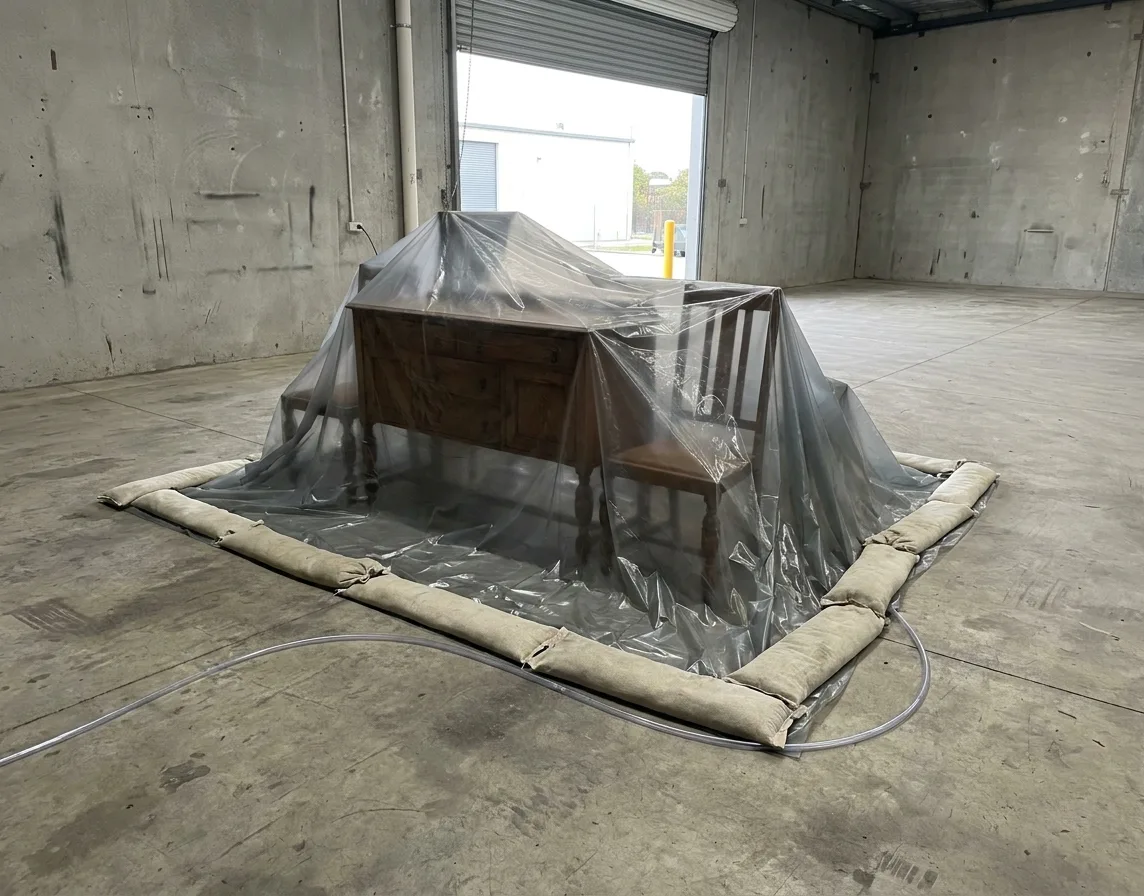
- Drywood termites that arrived in an object. An antique sideboard from Charleston, a carved headboard shipped from Florida, a crate of reclaimed heart pine. The giveaway is small piles of hard, six-sided pellets under the piece. The item can be fumigated on its own in a sealed chamber or under a tarp without involving the house.
- Powderpost and old house borer beetles. Some of the region’s nineteenth-century farmhouses and barns have beetle activity spread through framing that cannot be reached for surface treatment. When it is widespread and still active, structural fumigation is sometimes the only method that gets all of it.
- Museum, library and estate pieces. Collections that cannot be sprayed or heated are fumigated in containers.
In every case the first step is confirming the insect and confirming it is alive. Old beetle exit holes with no fresh powder beneath them are history, not an infestation.
Tenting compared with what we normally do
| Whole-structure fumigation | Soil treatment or bait | |
|---|---|---|
| Reaches the colony in the ground | No | Yes |
| Protection after the job | None | Years, with renewal |
| Time out of the house | Two to three days | None |
| Preparation | Food and medicine bagged or removed, plants and pets out, gas service shut off | Clear access to the foundation |
| Right tool for | Drywood termites and deep beetle infestations | Eastern subterranean termites |
How a fumigation job is handled
Structural fumigants are restricted-use products, and Virginia requires a specific fumigation certification to apply them. When a job calls for it, C’ville Termite Removal Experts brings in a crew that holds that certification and stays on as your single point of contact, from the preparation checklist through to the clearance reading that says the building is safe to reoccupy.
Furniture and container work is simpler. The piece is collected or dropped off, sealed, treated and aired, and returned in a matter of days. Finishes, glue, upholstery and veneers are not affected by the gas.
Be wary of a quote to tent for subterranean termites. If someone proposes fumigating a Charlottesville house for the ordinary ground-nesting termite, ask how the treatment reaches the colony in the soil. It does not.
For an object too delicate for gas, or an owner who would rather avoid it, heat treatment covers much of the same ground. And if what you have is the usual local termite, the page you want is termite treatment.