
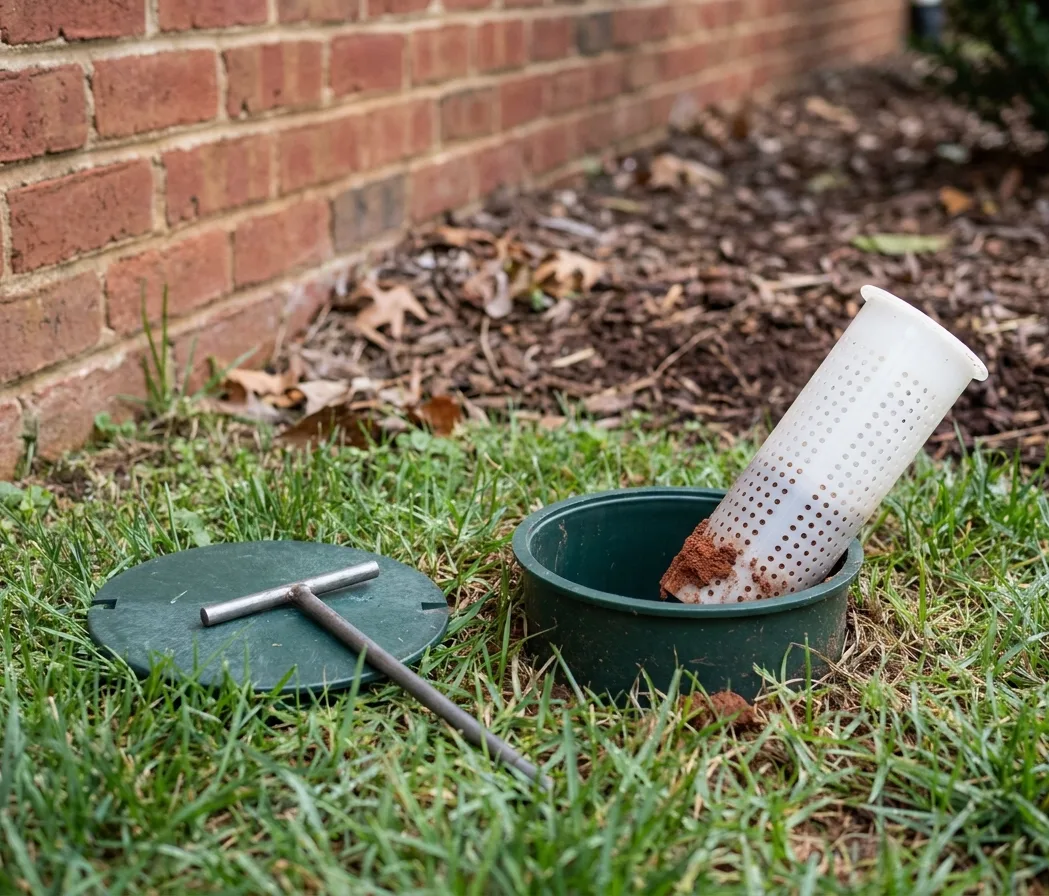
How a bait station does its job
Subterranean termites forage blindly. Workers tunnel outward from the nest in every direction and recruit nestmates to whatever food they bump into. A bait station takes advantage of that habit. It is a plastic sleeve sunk into the ground with a cartridge of compressed cellulose inside, and the cellulose carries a slow-acting ingredient that keeps young termites from completing their next molt.
Slow is the point. A worker that fed this morning is still alive tonight, back in the nest, passing the bait mouth to mouth. Weeks go by before the colony starts losing members faster than the queen can replace them, and by then the bait has travelled far beyond the foragers that first found it.
What installation looks like on a Charlottesville lot
- Layout. We pace the outside of the house and mark a station roughly every ten to fifteen feet, closer together near downspouts, hose bibs, old stumps and anywhere tubes have been seen.
- Coring. Each position gets a hole about the size of a coffee can. In turf we lift a plug; in the red clay most of the city sits on, we use an auger. Utility locating is requested before any digging.
- Setting. The station goes in flush with the ground so a mower passes straight over it, and the cap locks with a key that only the technician carries.
- Mapping. You receive a simple diagram with every station numbered, which is also what we work from on later visits.
A typical house takes a morning. Nothing is sprayed and nobody has to leave.
The service visits are the product
A station nobody opens is just a piece of plastic in the yard. What you are paying C’ville Termite Removal Experts for is the schedule: a technician unlocks every station, looks at how much of the cartridge has been eaten, notes live termites or fresh mud, and replaces whatever has been consumed. Stations with feeding get looked at more often until the feeding stops.
| What we find in a station | What happens next |
|---|---|
| Cartridge untouched | Logged and relocked; nothing to change |
| Light grooving, no live insects | Flagged for an earlier return check |
| Live workers and packed mud | Fresh cartridge fitted, neighbouring stations checked, and extra stations added if the spacing is wide there |
| Flooded or heaved by frost | Reset or moved a foot or two to drier ground |
Where stations suit a property, and where they do not
- Good fit: slab houses in Hollymead and Forest Lakes, finished basements around Barracks Road, any home with a well close to the foundation, and owners who want the ground watched year after year.
- Good fit: historic houses where trenching would disturb old boxwoods, brick walks or a stone foundation that should not be undermined.
- Poor fit on their own: a house with heavy live activity in the framing today. Bait needs weeks to work, so we usually pair it with a spot liquid application where the termites are feeding now.
Questions people ask before they sign
- Are the stations a risk to dogs or children?
- The bait sits below ground inside a locked sleeve, and the active ingredient targets an insect molting process that mammals do not have. Curious dogs occasionally dig around a new station; they cannot open it.
- How long until the termites are gone?
- It depends on when foragers find a station and how large the colony is. A few months is common. Cold soil slows feeding, so a system installed in November often shows its first hits in spring.
- What if I stop the service?
- The stations stay in the ground but stop protecting the house once the bait is eaten or goes stale. We remove them on request.
Leave the caps alone. Opening a station to have a look disturbs the termites inside, and a disturbed feeding site is often abandoned. If you are curious, ask the technician to show you at the next visit.
Not sure whether you have termites to bait in the first place? A termite inspection answers that, and our monitoring system page covers the lighter-touch option for houses with no activity.