
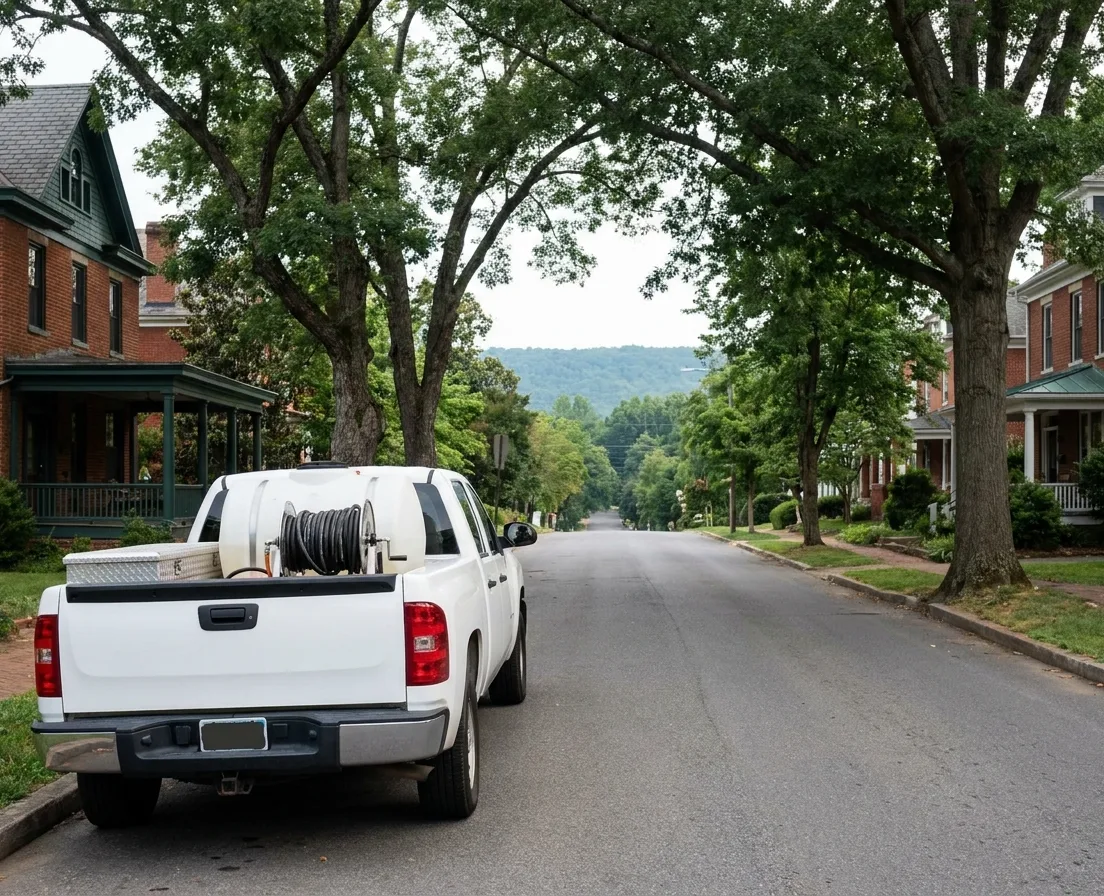
A company that stays close to home
The name tells you where we work. Everyone around here says C’ville, and we chose to keep our service area to the city and the county around it rather than expand into places we do not know. That means our technicians drive the same routes every week, know which neighborhoods have the old pier foundations and which have the deep mulch beds, and can usually tell you what a house is likely to need before they reach the front door.
Working locally also makes follow-up practical. A bait station check in Crozet or a second look at a crawl space in Woolen Mills is a short trip for us, so these visits happen on schedule instead of being pushed back.
How we like to work
Name the pest before choosing the product
Carpenter ants, powderpost beetles, wood rot and termites can all leave damaged wood, and each one needs a different response. So can bat bugs and bed bugs, or field mice and roof-climbing squirrels. We identify what is actually there, write it down, and only then talk about treatment.
Show you what we found
Our reports include photos from the crawl space, attic or foundation, so you are not taking our word for anything. If you are buying or selling, that same record is something you can share with agents and lenders.
Point out the cause, not just the pest
A downspout draining against the foundation, a sagging vapor barrier, a gap under the garage door: these are the reasons pests keep coming back. We point them out in writing, even when fixing them is a job for you or another trade rather than us.
Homes, rentals and local businesses
Most of our customers are homeowners, from century-old houses near the Downtown Mall to new builds out in the county. We also look after rental houses and apartment buildings for landlords who need tidy service records, and small commercial properties such as offices, shops and restaurants that need visits scheduled around their hours.
What we will tell you up front
- Larger wildlife such as raccoons, groundhogs, snakes and bats go to a licensed wildlife specialist. We will pass along a referral.
- We document termite damage but do not repair it. Keeping inspection and carpentry separate means our findings are never shaped by a repair bid.
- If a house shows no termite activity and few risk factors, we will not push a treatment just because you asked for a price.
- Every price from C’ville Termite Removal Experts is in writing before work begins, including what renewal costs in future years.
Want to see how that works in practice? Start with a termite inspection.