Who books an inspection with us
Most calls fall into three groups. Owners who spotted something — a mud tube on a basement wall, a soft stair tread, a pile of wings on a sill — and want to know what it means. Buyers and sellers working through a contract in Albemarle County. And people who have lived in the house for years, never had it checked, and would like to know before a small problem turns into a structural one.
All three get the same visit. What changes is the paperwork at the end and how quickly we need to deliver it.
What we check on the property
Outside the house
- The full foundation line, looking for shelter tubes on brick, block, parging and stone.
- Porches, decks, steps and additions, especially where they meet the original house.
- Wood touching soil, mulch height against the siding, and grading that sends water toward the walls.
- Gutters, downspouts and the soil beneath them.
- Stumps, fence posts and firewood close to the structure.
Inside and underneath
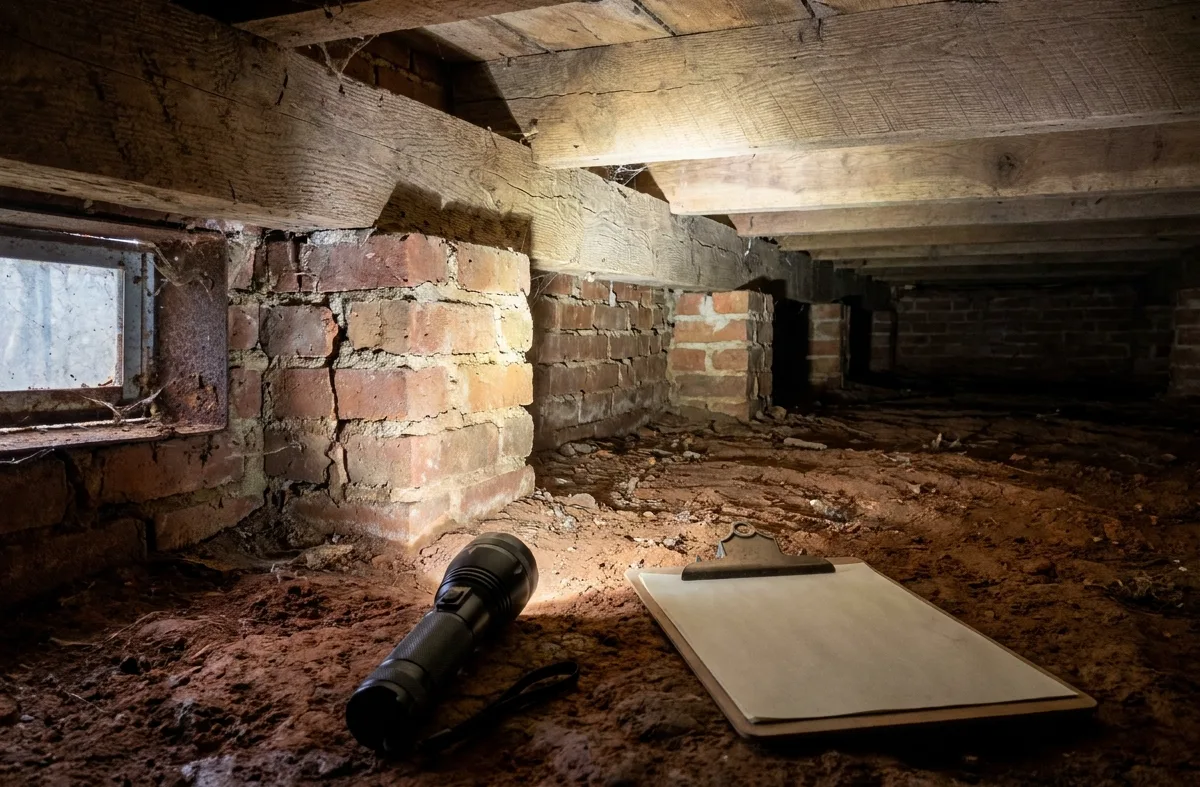
- Crawl spaces, entered and walked or crawled, not viewed from the hatch.
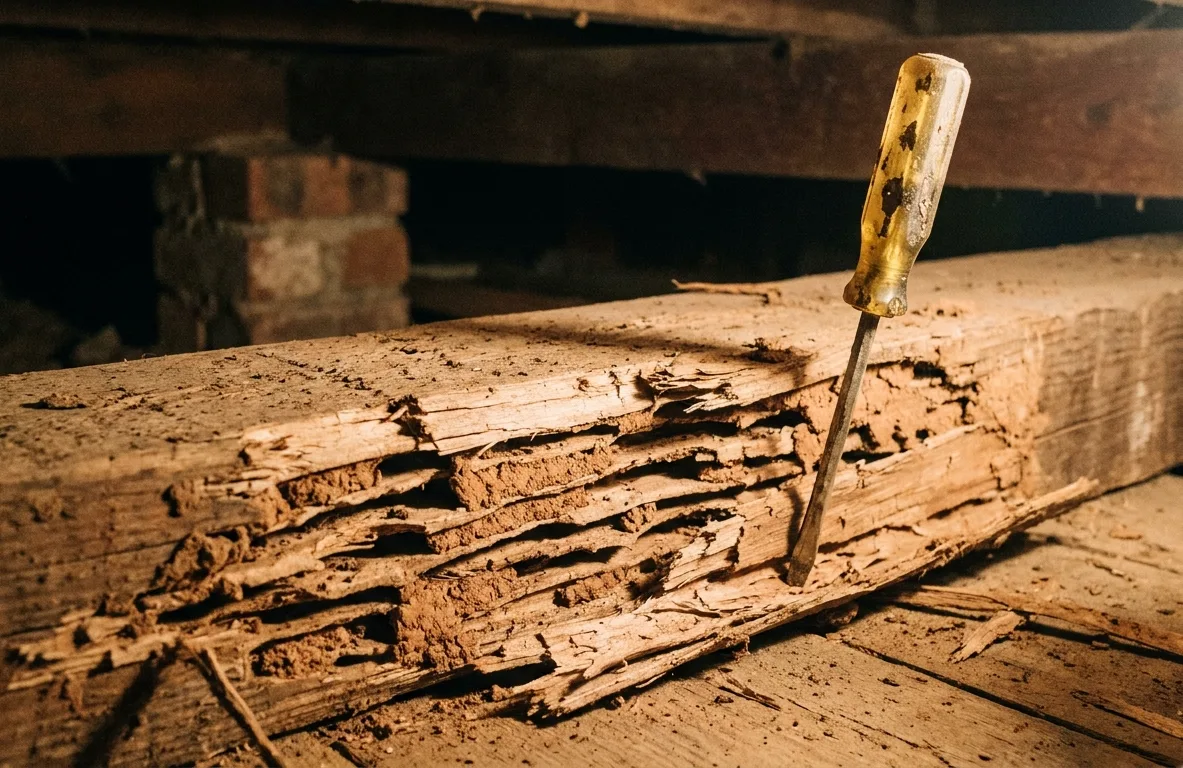
- Piers, sill plates, band boards and floor joists, probed with a screwdriver and checked with a moisture meter.
- Unfinished basement walls, the joint where slab meets wall, and the areas around plumbing coming through the floor.
- Garages, especially where the slab sits against framed walls.
- Baseboards, door frames and window trim on the lowest level.
Some areas cannot be seen without removing finishes: a fully finished basement, a crawl space too low to enter, or siding over foam board. Anything we could not reach is listed as inaccessible on the report rather than quietly passed over.
Signs we look for, and what each one tells us
| What we find | What it usually means |
|---|---|
| Fresh, moist mud tubes | Termites are traveling between the soil and the house right now |
| Dry, crumbling tubes | Old activity, or a colony that has moved to another entry point; worth looking harder nearby |
| Wood that sounds hollow or crushes under a probe, with soil packed inside | Subterranean termite feeding, which is different from rot or carpenter ants |
| Piles of shed wings near windows or doors | A swarm came from inside the structure |
| Clean, smooth galleries with sawdust nearby | More likely carpenter ants, which need a different treatment |
| High moisture readings in framing | Conditions that favor termites, even if none are active yet |
Wood destroying insect reports for home sales
Many Charlottesville purchase contracts, and a number of mortgage programs, call for a wood destroying insect report before closing. We complete the standard NPMA-33 form, which covers termites along with carpenter ants, carpenter bees and wood-boring beetles. It records what was observed, what was not accessible, and whether any past treatment was visible.
Because these inspections usually fall inside a contract deadline, we try to schedule them within a few business days and send the signed form to whoever you name: buyer, seller, both agents or the lender. If something is found, the report says so clearly, and we can quote a treatment the same day so the parties have a number to negotiate around.
How often to have the house checked
Once a year is a sound habit for most homes in this area, and a termite agreement normally requires it to stay in force. Consider a shorter interval if the house has been treated before, sits on a damp crawl space, has a wooden addition on a separate footing, or backs onto woods where colonies are already feeding on fallen trees.
Spring, just before or during swarm season, is a popular time to book, but termites feed all year in the soil here, so any month is a reasonable time to look.
If we find nothing, we say so. A clean report is a perfectly good outcome. You will not be pushed into a preventive treatment on a house with no activity and no real risk factors.
When an inspection does turn up live termites, the next step is choosing a termite treatment that suits the foundation. C’ville Termite Removal Experts will walk you through the choices with the report in hand.